Google Wants AI to Become Boring
Why Google may be trying to make intelligence disappear.

In 1998, two Stanford PhD students wrote a paper about how to rank web pages, and the entire internet reorganized itself around the answer. You know how that one ended. The two kids were Larry Page and Sergey Brin, the paper was PageRank, and the company they built off it spent the next twenty-five years being the toll booth every road on the internet ran through.

In 2017, eight researchers wrote another paper. It was called “Attention Is All You Need,” and it introduced the transformer the thing underneath ChatGPT, underneath Claude, underneath every model that got a magazine cover for supposedly being the Google killer. Here’s the punchline. Those eight researchers worked at Google.
Sit with that for a second, because everyone breezes past it. Google published the founding document of its own disruption, put it on the internet for free, and then watched a startup in San Francisco read its homework and nearly steal the crown with it.
Now. If you invented the bomb, handed it to the guy across the street, and watched him aim it at your house, how would you feel?
Furious, right? You’d learn your lesson. You’d never give away the paper again. You’d lock the lab, patent everything, sue somebody.
Google’s response looks like the opposite. And that response, a company nearly disrupted by its own invention answering by giving away even more is the whole story. It’s the tell. It’s the thing that suggests Google is playing a different game than most of the industry, and a lot of people cheering the stock haven’t noticed which game.
Let me show you the game.
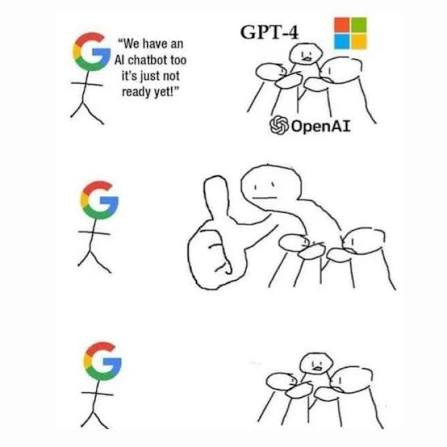
In early 2023, it looked like Google had fumbled the future. Bard hallucinated in its own launch demo, and Alphabet lost about $100 billion in market value in a single day. Kodak with better logos. For about a week, half of Silicon Valley published some version of that obituary.
Hold onto Bard. We’re coming back to him.
Because in hindsight, that moment says more about what everyone was measuring than about what Google was building. Everyone was grading a chatbot. Google was increasingly behaving as though the chatbot wasn’t the thing worth winning.
What if the whole industry was watching the wrong game?
Here’s the game everyone thinks they’re watching.

There’s a race. The prize is the smartest model. OpenAI, Anthropic, Google, a rotating cast of Chinese labs, all sprinting, and every few months somebody posts a benchmark score and the tech press treats it like a Game. A model climbs three spots on a leaderboard and it’s a headline. Drops two points on a reasoning test and by dinner someone’s declared the moat dead.
Everyone agreed, with total confidence, on the rules. Ship the smartest model, win. That’s the whole theory. Nobody interrogated it, because it’s the obvious read, and the obvious read is usually right.
So watch what Google does, if that’s really the game.
It gives away Gemma a genuinely good model free, to any nine-person startup that wants to go build a competitor with it. It publishes compression research that teaches the whole world how to run Google-quality models on cheaper hardware, meaning less need for Google’s own cloud. Then it ships Gemini Nano straight into Android, so the model runs on your phone, where Google can’t meter it, can’t bill for it, can’t own the moment.
Three moves. All in the same direction. All insane if the model is the prize.
You do not hand the vault key to strangers when you’re racing to own what’s in the vault.
Unless you were never racing for what’s in the vault.
Here’s the sentence the whole thing hinges on, and I want you to feel the weight of it:
Gemini isn’t the product. It’s the electricity.
Now hold on. Before you go repeat that at a dinner party it’s not quite right, and the part that’s wrong is the part that matters.
Electricity is dumb. A grid doesn’t get smarter because more toasters plug in. The kilowatt that hit your coffee maker this morning learned nothing about how you take your coffee.
Google’s grid learns.
Every search sharpens the ranking. Every wrong guess the model makes on your phone teaches it to guess better. Every doc in Workspace, every route in Maps none of it dead-ends. It flows back in. Imagine a power grid where every toaster quietly reported how it liked its toast, and next winter the electricity itself showed up better suited to bread.
That’s not a grid. That’s a grid with a nervous system.
So if the model was never the prize what is?
You win the way a utility wins. Own the grid. Then get somebody else to help pay for the power.
Google moved the meter onto your phone. When Nano runs on-device, the compute drains your battery, not Google’s data center. Google’s own docs say the quiet part out loud: on-device inference eliminates the server call and its cost. Say that last word slower. You. One of the most-used AI systems alive, and Google doesn’t pay to power it, cool it, or run it. The customer just built his own substation and doesn’t know it.
There’s a quieter bet buried in this, and it’s the whole ballgame. Cheaper intelligence could go two ways. People ask the same number of questions for less money flat demand, thin margins, a shrinking business in an efficiency costume. Or it behaves like cheap coal in the 1800s: get it cheap enough and nobody uses less, they invent a thousand new things to burn it on. Every move Google makes only pays off in the second world. Coal, not tax returns. If intelligence turns out to be capped if people just want their ten questions answered and then stop the entire strategy is a very expensive mistake. Google is betting it’s coal. I think they’re right. But that’s the bet.
Now step back and look at what Google actually owns, because this is the part where it should click.
Want to ask a question? Search. Want it on your phone? Android. In your browser? Chrome. At work? Workspace. By the time an answer reaches your eyeballs, you’ve walked through four Google toll booths and never saw a single gate.
“Fine,” you say, “but half the world’s on iPhone.” Right and in January 2026, after years of trying to build its own AI stack, Apple gave up and licensed Google’s Gemini to run the next Siri, reportedly paying Google roughly a billion dollars a year for the privilege. Google doesn’t need to own the phone if it supplies the intelligence running inside it. The hallway changes. The current still flows.
And yes, Google kills products constantly. Reader, Inbox, Stadia, a whole graveyard site to catalogue them. But look at what’s actually buried there. Products. Things you were meant to open and judge. Google’s real wins were never things you open, Search became how you find, Chrome became how the web runs, Android became the layer under everything. Google is bad at things you visit and terrifyingly good at things you stop noticing.
Which is why the strangest thing about Google I/O 2026 was that almost nothing launched as its own thing. No new destination. No “download this.” Gemini just… appeared, inside five products you already had open. Google wasn’t shipping an AI app that quarter. It was rewiring five houses you already lived in.
And then here’s where the metaphor stops being a metaphor.
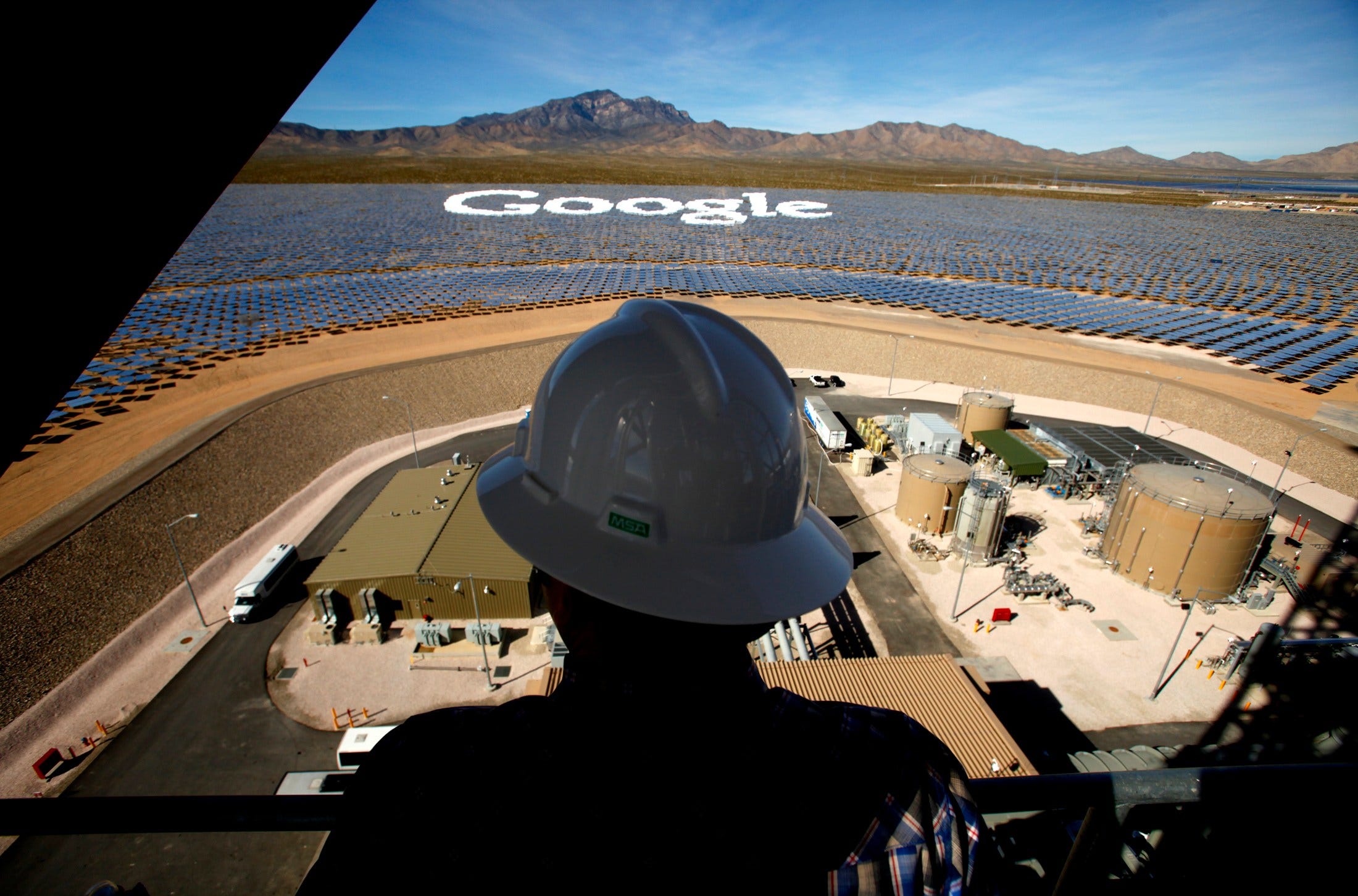
I started this essay calling Google “electricity.” Then I noticed Google spending a suspicious amount of time thinking about actual electricity. Not buying green power for PR, the way everyone does. Buying a $4.75 billion power company outright to secure dedicated generation for its data centers. And through X's Tapestry project, trying to build an operating system for the electric grid itself. Backing grid-storage projects. Investing in the physical grid beneath its digital one, years before it needs the capacity the same instinct that gave away the transformer, aimed now at literal electrons.
Read that staircase again, top to bottom. Models, given away. Phones, paying their own compute. Hallways, all owned. Cloud, pouring concrete years early. And underneath all of it, the actual power plants.
That’s not a company. That’s a public utility!
I’ll be honest about the other reading, because I don’t fully trust how much I like this one. Maybe it isn’t architecture. Maybe it’s just a company with more cash than judgment buying in every direction and calling the pile a strategy after a few bets land. That reading exists; I can’t kill it. What keeps dragging me back is the direction every move points the same way, and coincidence doesn’t aim.
There’s exactly one place the physics won’t cooperate, and honesty demands I name it.
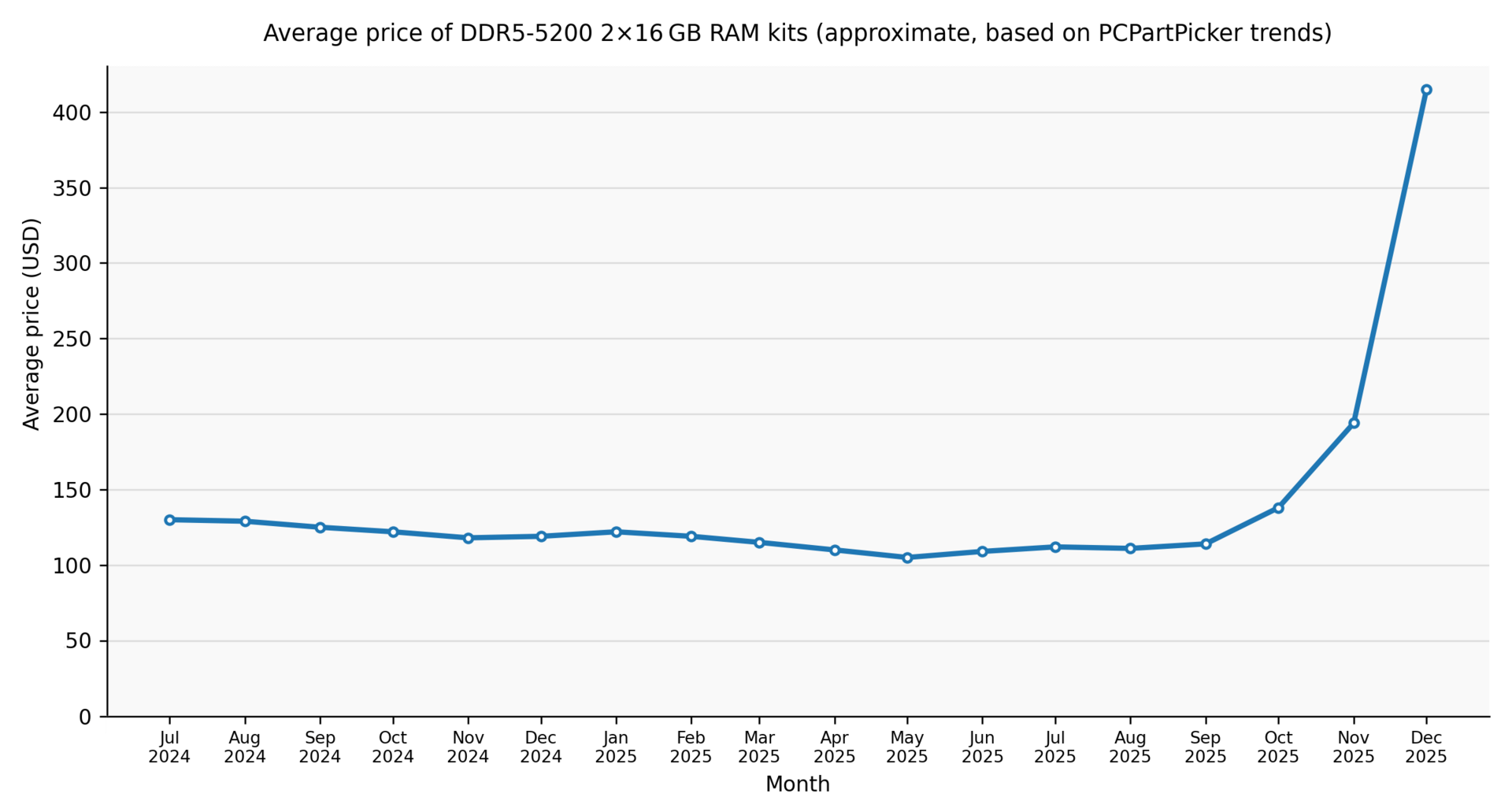
Running intelligence on billions of cheap phones takes memory. Memory comes from a few factories, and AI’s own hunger is eating the supply mobile memory prices have nearly doubled in a single quarter, and Micron, one of the few companies that makes the stuff, has all but abandoned consumer chips to chase AI customers, posting an 84.9% gross margin for the trouble. The AI boom Google is fueling is making the cheap phones Google’s plan depends on more expensive to build. You can’t out-engineer a factory shortage. You can only spend to outlast it which is part of why a company sitting on $127 billion in cash just raised one of the largest equity offerings in American history anyway. And the more Google looks like the hallway everyone has to walk through, the more regulators stop seeing infrastructure and start seeing a bottleneck. If intelligence becomes infrastructure, those hallways get more valuable and more dangerous to own.
One crack. In an otherwise sealed argument. I’ll take those odds.
Remember Bard?
The one that hallucinated on stage and cost Alphabet a hundred billion dollars before the next day’s close. The moment everyone still opens the story with. The proof that Google lost.
What if that was just the wrong exam?
Try something. Right now. Name the model that answered your last five questions. The one in your search bar. The one that finished your email. The one that summarized the doc, the one on your phone that guessed your next word.
You can’t.
That’s not a hole in your memory. That’s the entire thesis, landing three years late and very quietly. Everyone graded Google on whether it could build a chatbot you’d remember. Google was building something stranger a world where you never notice which model answered, because the second you asked, you were already standing inside its grid.
The winners of this era won’t be the companies whose models people remember. They’ll be the companies whose infrastructure people forget they’re using.